JOIN OUR LIST FOR 20% DISCOUNT


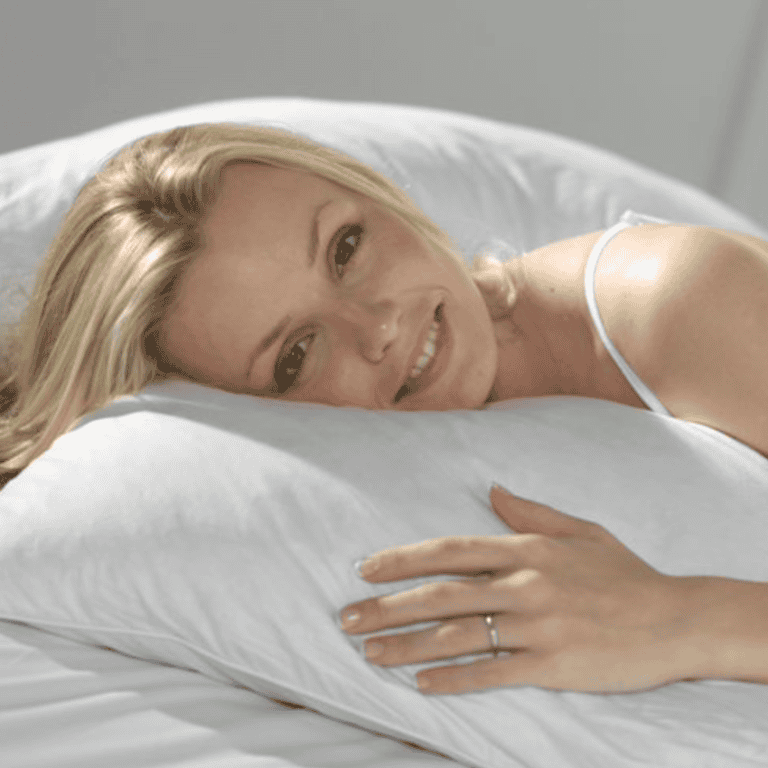
We spend roughly a third of our lives in bed, and the pillow is the one piece of bedding that touches your head, neck and shoulders all night. The wrong one can leave you with a stiff neck, sore shoulders, disturbed sleep and even morning headaches. The right one keeps your spine in a neutral line, from the base of your skull to your lower back, so your muscles can properly relax.
The best pillow depends on how you sleep, what it’s filled with, and whether allergies are a factor.
Start With Your Sleeping Position
Back sleepers need support that fills the natural curve of the neck without pushing the head forward. A medium-loft or medium to firm pillow usually works best. Too high and your chin tips towards your chest; too flat and your head drops back.
Side sleepers have the biggest gap to fill between ear and shoulder, so they need a higher, firmer pillow to keep the head level with the spine. A pillow that is too soft or thin lets the head sag sideways, straining the neck and shoulder. Some side sleepers also find that a second pillow between the knees helps to keep the hips aligned. This can be especially true in the case of pregnancy where there is an extra strain on muscles.
Tummy sleepers need the opposite: a thin, soft pillow, or sometimes none at all. A thick pillow forces the neck to arch backwards for hours. It’s also worth knowing that sleeping on your front is the hardest position on the neck, so a very soft, low-loft pillow is doubly important.
Natural Fillings: Goose Feather and Down
Feather and down pillows are the traditional luxury choice, and for good reason.
Down (the soft under-plumage) is softer and lighter, while feather is firmer and heavier. Blends of the two let you adjust the feel: more down for softness, more feather for support. We offer a range of 85/15 fillings which have 85% fine feathers & 15% down or 50/50 or pure down pillows all of which we are happy to say have been tried and trusted.
Wool Fillings
Wool is a natural fibre with some unusual talents. It regulates temperature, wicking away moisture so you stay cooler in summer and warmer in winter. It is naturally resistant to dust mites and mould, and it gives a supportive, slightly firmer feel than down. Wool pillows are a good option for people who want a natural filling without feathers, though they are generally firmer and less “plump” than down or synthetic options.
Microfibre
Microfibre pillows use fine synthetic fibres designed to mimic the softness of down.
Memory Foam
Memory foam responds to heat and pressure, moulding to the exact shape of your head and neck, then returning to shape when you get up.
The Question of Allergies
If you suffer from asthma, eczema, hay fever or a dust allergy, your pillow choice matters even more. Contrary to popular belief, most people are not actually allergic to feathers or down themselves. The usual culprits are dust mites and the dust that builds up in bedding. Well-cleaned, high-quality feather and down can be fine for many people, but if you are sensitive, it’s sensible to consider the following:
If you have a diagnosed allergy or asthma, it’s worth checking with your GP or pharmacist about what suits you best.
The Bottom Line
There’s no single “best” pillow, only the one that is best for you. Match the height and firmness to how you sleep, choose a filling that suits your temperature and budget, and take allergies seriously. If you wake up with a sore neck, or you’re constantly folding and thumping your pillow into shape, it may be time to change. A good pillow is one of the most affordable upgrades you can make to your sleep.
At MiBed, we are always happy to help if you need advice. We are a small, family owned & run business so we may not always be at the end of the phone, but we will be happy to get back to you a.s.a.p. if you can’t get hold of us. Try calling us first on 087-7819785 or send a WhattsApp to 087-3509091 or drop us an email at <info@MiBed.ie>
Last updated: 30 September 2026